Blog
How to Choose the Right Granulator Knife for Plastic Recycling
How to Choose the Right Granulator Knife for Plastic Recycling
Plastic recycling is a source of serious concern in contemporary manufacturing and environmental sustainability. The essence of this process is the cutting tool’s efficiency in granulators. The choice of the correct knife will decide the stability of the particle size, machine wear, and the efficiency of the operation.
Selecting the right granulator knives for plastic recycling is not a simple matter of putting and implement into a machine, it is a matter of knowing how to match a cutting tool with a material, how to cut, and how long the tool lasts. Making the right choice of machine knife can have a great influence on productivity, cost savings, and the life of the equipment.
1. Understanding the Type of Plastic Material
The various forms of plastics vary in the cutting process. From soft polyethylene to high-rigidity engineering plastics, the requirements of each material on the cutting tool vary.
Why Material Type Matters
Hard and sharp cutting edges are needed to cut soft plastics, whereas hard plastics will take stronger and wear-resistant cutting edges.
Common Plastic Types:
- PET (Polyethylene Terephthalate)
- HDPE (High-Density Polyethylene)
- PVC (Polyvinyl Chloride)
- ABS (Acrylonitrile Butadiene Styrene)
Selection Tips
- Hardness of match blades to plastic density.
- Select abrasive plastic wear-resistant alloys.
The selection of granulator knives for plastic recycling depends on the type of material, ensuring higher efficiency and reduced wear.
2. Blade Material and Metallurgy
The microstructure of the steel used in blade manufacturing directly influences its performance and service life. High-quality alloys offer superior resistance to wear, impact, and heat.
Key Material Properties
- Hardness for edge retention
- Impact resistance toughness.
- Long-duration wear resistance.
Common Blade Materials
- D2 (AISI D2 / DIN 1.2379): Most commonly used, has high wear resistance, good edge retention and moderate toughness
- A8 (AISI A8 / DIN 1.2360): Higher toughness than D2, Good wear resistance, Better for impact applications
- H13 (AISI H13 / DIN 1.2344): Good heat resistance, Balanced wear and toughness, Performs well under thermal stress
Best Practices
- Select material as per the cutting application.
- Blades used be thoroughly hardened and tempered to achieve required hardness.
Appropriate metallurgical selection ensures that granulator knives maintain optimal performance and durability during prolonged use.
3. Knife Design and Cutting Geometry
The blade design is important in cutting efficiency. The angle, the thickness, and the edge profile define the efficiency of the knife working on plastic materials.
Relevance of Cutting Geometry
Proper cutting geometry minimizes friction and ensures smooth material flow within the granulator.
Design Factors to Consider:
- Angle of the cutting edge
- Blade thickness
- Number of cutting edges
- Rotor and bed knife compatibility.
Performance Benefits
- Cleaner cuts
- Reduced energy consumption
- Improved chip consistency
- Lower machine strain
Optimized design enhances the operational efficiency and performance of granulator knives.
4. Heat Treatment and Hardness Consistency
The performance of granulator knives depends not only on material selection but also on proper heat treatment, which defines the blade’s hardness and structural integrity.
Why Heat Treatment Is Essential
Without proper heat treatment, blades may develop uneven hardness, making them prone to early failure through cracking or excessive wear.
Key Benefits:
- Even distribution of hardness.
- Increased resistance to fatigue.
- Enhanced durability
- Better edge retention
What to Look For
- Regulated processes of heat treatment.
- Quality certifications
- Uniform hardness of the blade.
5. Compatibility with Granulator Machine
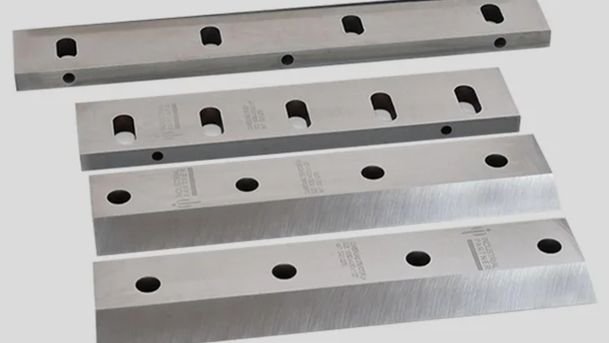
Granulator models require precise knife size, shape, and mounting design. Incompatible knives can compromise performance and may cause damage to the machine.
Compatibility Factors
- Machine brand and model
- Rotor configuration
- Knife dimensions
- Mounting hole patterns
Why Compatibility Matters
Poor fitting may lead to vibration and non-uniform cuts coupled with rapid wear.
Best Practices:
- Adhere to manufacturer specifications.
- Knives used should be compatible or OEM.
- Check dimensions prior to installation.
- Compatibility is essential in order to reach optimal performance.
6. Maintenance and Sharpening Requirements
Proper maintenance is essential for extending blade life. Some knives require frequent sharpening, while others are designed for longer intervals. Regular inspection is necessary.
Maintenance Considerations
- Ease of sharpening
- Edge retention duration
- Frequency of inspection
Tips for Better Maintenance
- Establish a regular sharpening schedule
- Use professional grinding equipment
- Avoid overheating during sharpening
- Regularly monitor wear patterns
7. Production Volume and Application Load
The size of the operation is another factor that affects the choice of knives. Large-scale recycling centers have more durable blades when compared to low-capacity ones.
Performance Impact
The selection of an appropriate blade according to workload will make the output consistent and will avoid failure at an early stage.
8. Cost vs. Long-Term Value
As much as cost is a consideration at all times, emphasizing the first price may have long-term costs. The cheap blades usually demand frequent replacement and maintenance.
Assessment of Total Cost of Ownership
- Blade lifespan
- Maintenance costs
- Downtime impact
- Machine wear
- Smart Investment Strategy
High quality Granulator knives for plastic recycling would decrease the cost of operations in the long run and increase efficiency.
Why Choosing the Right Knife Matters
The cutting tools used in a plastic recycling system are very important to its performance and the quality of the cutting tool. The wrong blade option will lead to:
- Poor granule quality
- Increased machine wear
- Higher energy consumption
- Frequent downtime
Conclusion
Choosing the appropriate granulator knife is a very important choice to be made in a plastic recycling process. The type of material, metallurgy of the blade, cutting geometry, heat treatment, compatibility with machines, and even maintenance requirements contribute greatly to determining the performance.
Selecting good granulator knives for plastic recycling can assure efficient cutting, lessen downtime, and provide long-term economies. Companies that focus on quality and good selection are advantaged by the enhanced productivity and reliability.
At Industrial SharpCut, machine knives are precisely designed using high-quality materials and advanced manufacturing technologies to meet the demanding requirements of the plastic recycling industry. By investing in the right cutting solutions, you ensure consistent performance, durability, and optimal efficiency.
Recent Posts