Blog
Top 5 Common Reasons Why Industrial Blades Fail Early And How To Prevent Them
Top 5 Common Reasons Why Industrial Blades Fail Early And How To Prevent Them
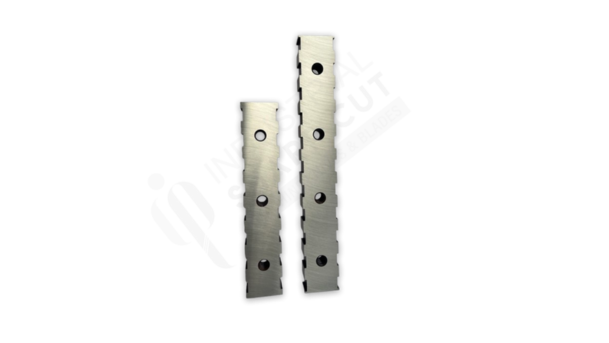
Industrial blades are vital in ensuring productivity, accuracy, and safety in both the manufacturing and processing sectors. Nevertheless, untimely blade wear-out is one of the challenges facing numerous activities, resulting in prolonged downtime, increased replacement expenses, and poor quality of output. Learning about the reasons behind the premature death of industrial blades and, more to the point, the means of preventing the focused issue can help enhance the efficiency of operations and their longevity to a considerable degree.
This article discusses the five best causes of early failures of industrial blades and gives practical measures that can ensure an industry realises optimal utilisation of its cutting blades.
1. Incorrect Blade Material Selection
Making a bad selection of the blade material to be used in the application is one of the most widespread causes of premature failure of the blade.
Why Material Selection Matters
Industrial blades have to withstand extreme circumstances in the form of high speed, pressure, heat, and abrasion. A blade material that is not hard or tough enough will wear out at an unanticipated rate.
Common Issues Caused by Incorrect Material:
- Rapid edge wear
- Chipping or cracking
- Reduced cutting accuracy
- Frequent blade replacement
How to Prevent It
- Select steel grades depending on the cutting environment and hardness.
- D2 steel is to be used where very high wear resistance is required.
- Use HSS or alloy steels for impact resistance.
- Seek advice from blade manufacturers on application-specific advice.
The basis of the sustainable industrial blades is the choice of the material.
2. Poor Heat Treatment and Metallurgical Quality
The finest steel will break unless it is properly heat-treated. The hardness, toughness, and wear resistance of the blade depend on heat treatment. Poor heat treatment will lead to blades that are too brittle or too soft.
Impact of Improper Heat Treatment
Blades that are not uniform in hardness will be able to lose the cutting edge more rapidly or crack when in use. This not only has an impact on performance but also creates safety hazards.
Indications of Heat Treatment Problems:
- Uneven blade wear
- Micro-cracks on the cutting edge.
- Frequent edge dulling
- Unexpected blade breakage
How to Prevent It
- Ensure that the blades are heat treated in controlled heat treatment facility at required temperature (as per steel grade) and tempered(stress relieving) atleast thrice at different temperatures to achieve uniform grain structure.
- Make sure the complete blade is through hardened and not case hardened.
3. Improper Blade Installation and Alignment
Even a high-quality blade may break down even before it can be properly installed. Poor mounting, wrong torque, or misalignment imposes unnecessary loads on the blade and machine.
Why Installation Plays a Critical Role
Poor installation causes uneven forces of cutting, vibration, and overloading of the blade edge. This will lead to exhaustion and premature breakdown.
Poor installation may lead to the following Problems:
- Uneven edge wear
- Blade vibration and noise
- Reduced cutting precision
- Both the blade and the machine were damaged.
How to Prevent It
- Installation according to the instructions of the manufacturers.
- Make sure that there is alignment and balancing.
- Proper torque values should be applied during mounting.
- Periodically check the position of blades.
Proper installation will maximise the running of industrial blades as well as their life span and protect the machines.
4. Lack of Regular Maintenance and Regrinding
Failure to maintain the blade is also one of the key causes of early blade failure. The blades become dull with time, although constant use without care hastens this process, and the damages become permanent.
Consequences of Poor Maintenance
The use of dull blades with dullness promotes friction, heat, and energy usage. It does not just reduce the life of blades, but it also impacts the quality of products.
Common Maintenance-Related Issues:
- Overheating of blades
- Deformed cutting edges
- High consumption of power.
- Poor cut quality
How to Prevent It
- Introduce a frequent blade inspection program.
- Regrind the blades prior to their excessive wear.
- Professional regrinding services should be used.
- Blades should be placed in the store safely to prevent damage at edges. Use edge protection beading to protect cutting edges.
Preventive maintenance will guarantee the serviceability of the industrial blades in terms of performance and service life.
5. Operating Beyond Recommended Parameters
Each blade has a set of limits of operation in terms of speed, load, and material. Going beyond these parameters causes too much stress on the blade, which causes premature failure.
Risks of Overloading Blades
Both wear and thermal and mechanical fatigue are increased when blades are driven beyond their design capacity.
Indicators of overuse:
- Burn marks on blade edges
- Sudden edge chipping
- Increased vibration
- Reduction of cutting efficiency.
How to Prevent It
- Work machines within the acceptable load and speed limits.
- Blade design to match material depth and steel hardness.
- Watch machine performance at minimum intervals.
Obedience to operational limits assists in preserving the integrity of the blade and guarantees maximum use of industrial blades.
Conclusion
Multiple factors are not often at fault in causing the premature failure of industrial blades. It is, most times, a consequence of improper material selection, improper heat treatment, improper installation, no maintenance, or overworking.
At Industrial Sharp Cut, we do realise that each cutting application presents its own challenges. This is why we produce high-quality industrial blades with the help of high-quality materials, high-level heat-treatment technologies, and high-quality standards. Industrial Partner provides a highly performance-driven, durable and application-driven solution that assists industries in attaining trustworthy cutting outcomes and value-lasting results.
The first step on the way to stable performance and operational excellence is the right choice of the blade partner.
Recent Posts